Living in Bonny Scotland

September 13, 2026
Living in Bonny Scotland
The title for today’s blog came from a gentleman I met yesterday. We were both attending a meeting at my church, where a member of Wycliffe Bible Translators was speaking. During the conversation, I asked this man about his own story, and what he shared was remarkable.
He began his career in London, working for the civil service. Later he moved to Scotland and became a policeman. Around that time, he became a Christian, and soon felt a call to minister in China—more specifically, Taiwan. He served there for seven years before sensing a new direction: teaching. So, he returned to school, earned his qualifications, and spent fourteen years in the classroom.
Then another calling arrived. He felt led to preach, which sent him off to Bible school and eventually into a pastorate for several years. Now retired, he serves as a supply preacher, stepping in wherever he’s needed. He was delightful to speak with—humble, thoughtful, and full of stories shaped by obedience and change. His journey reminded me how many chapters a life can hold, and how each calling can prepare us for the next.
This week itself was a quiet one. I realized my time in Scotland is growing short, and I need to make plans for the days I have left. I arranged trips to Inverness and another visit to Edinburgh, and there are still several places around Aberdeen I want to see before I go.
I did make it to the Aberdeen Art Museum, which is very nice—bright, well curated, and
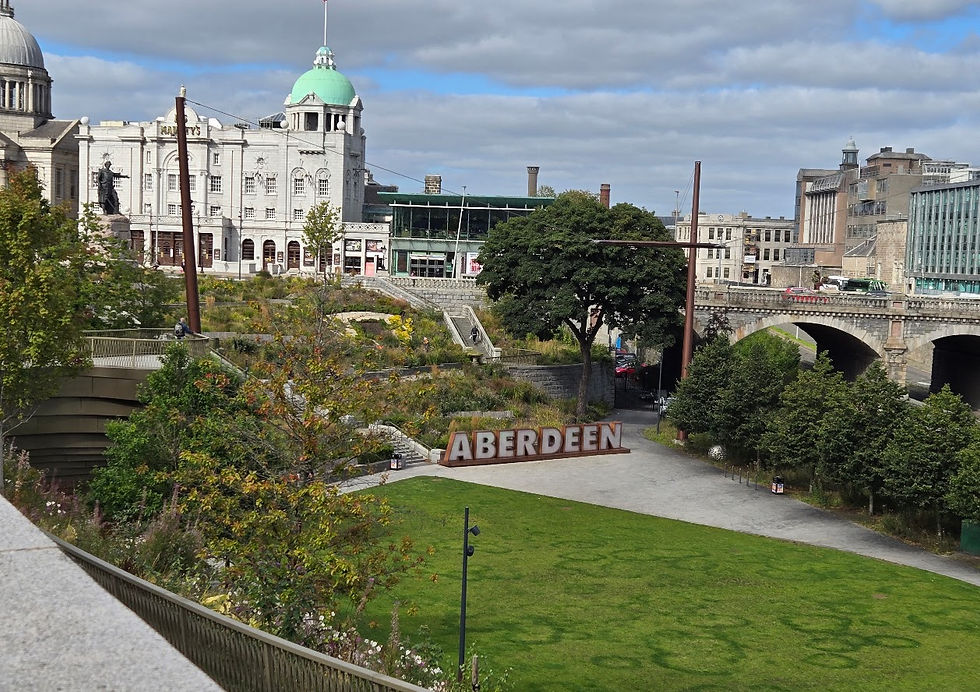
easy to wander through. I also walked through Union Terrace Garden. It’s clearly between seasons right now, but you can tell how beautiful it must be in full spring and summer bloom. Aberdeen has so many gardens and parks scattered throughout the city, though this is the only one I’ve managed to visit so far.
So now, here are a few interesting things about living in Scotland.
Money
I was looking through my pound notes to see if I had one with King Charles’s picture on it. As I shuffled through the bills, I realized none of them had a monarch on them at all. Then it dawned on me—they weren’t printed by the Bank of England, but by the Bank of Scotland. Instead of kings and queens, the Scottish notes feature William Wallace, Robert the Bruce, and Sir Walter Scott.
I’ve always thought of England, Scotland, Wales, and Northern Ireland as somewhat “state‑like,” so it never occurred to me that they might print their own currency. In fact, I’m still not sure whether Wales or Northern Ireland do. When I mentioned this to a few people from England, they weren’t convinced Scottish notes would be accepted there. I don’t know if that’s true, but it does make me think I should probably use up my Scottish currency before I leave Scotland.
The Royal Family
I’ve been curious about how people in Scotland feel about the royal family. In general, most people seem to like them and approve of them. There’s a sense that the monarchy is one of the things that makes Britain Britain. They certainly don’t approve of Andrew Mountbatten‑Windsor, and several people seem puzzled about why Harry and Meghan are back in the UK.
I got a very strong reaction when someone asked which royals had appeared at the Braemar Gathering. I answered, “Only the King and Queen,” meaning no other members of the family were present. The response I received—several versions of “ONLY the King and Queen?”—made me realize I should have phrased that more carefully. To many people here, the presence of the King and Queen is hardly an “only.”
Of course, there are republicans around, and some people still feel the royals take too much taxpayer money. But I don’t sense any feeling that the monarchy is in danger of being abolished. It seems woven into the identity of the country, even among those who question parts of it.
Grocery Stores
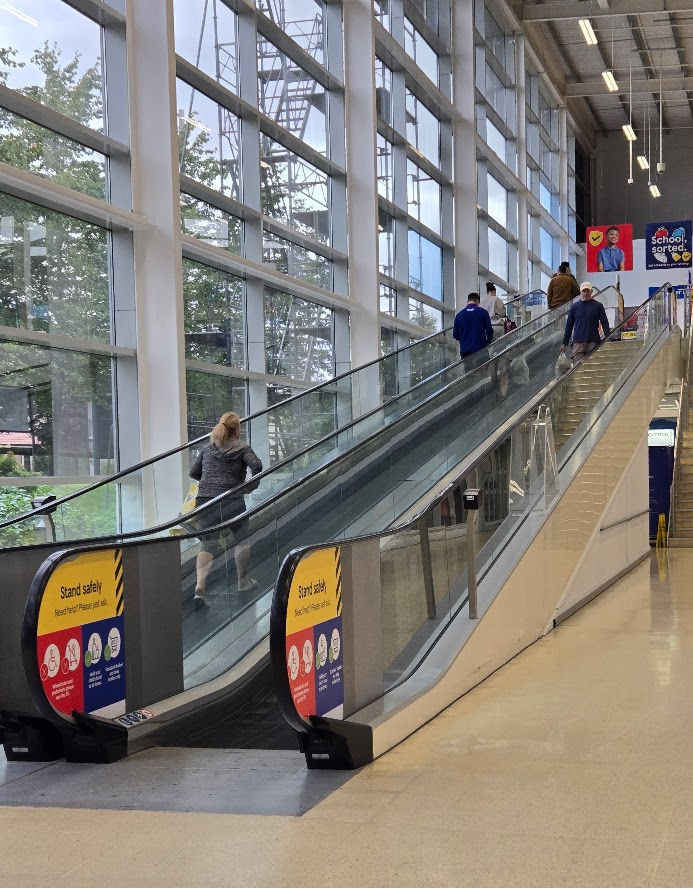
The grocery stores here aren’t all that different from those in the US, but mine has a few interesting quirks. When you enter my Tesco, you’re immediately facing a moving ramp—not an escalator—that carries you and your shopping cart up to the store. I’ve seen escalators with separate cart escalators beside them, but never anything where you simply push your cart onto the moving ramp and ride along with it. They do have an elevator for those who need it.
Tesco also offers “click and collect,” but the pickup area is surprisingly far from the store itself. I’ve never tried it, and I rarely see anyone using it, so I’m not entirely sure how it works in practice. They do offer delivery, which I use. Instead of arriving in a dozen or more bags, the groceries come in large crates. I have to let the delivery person into the apartment, and they unload everything in my kitchen
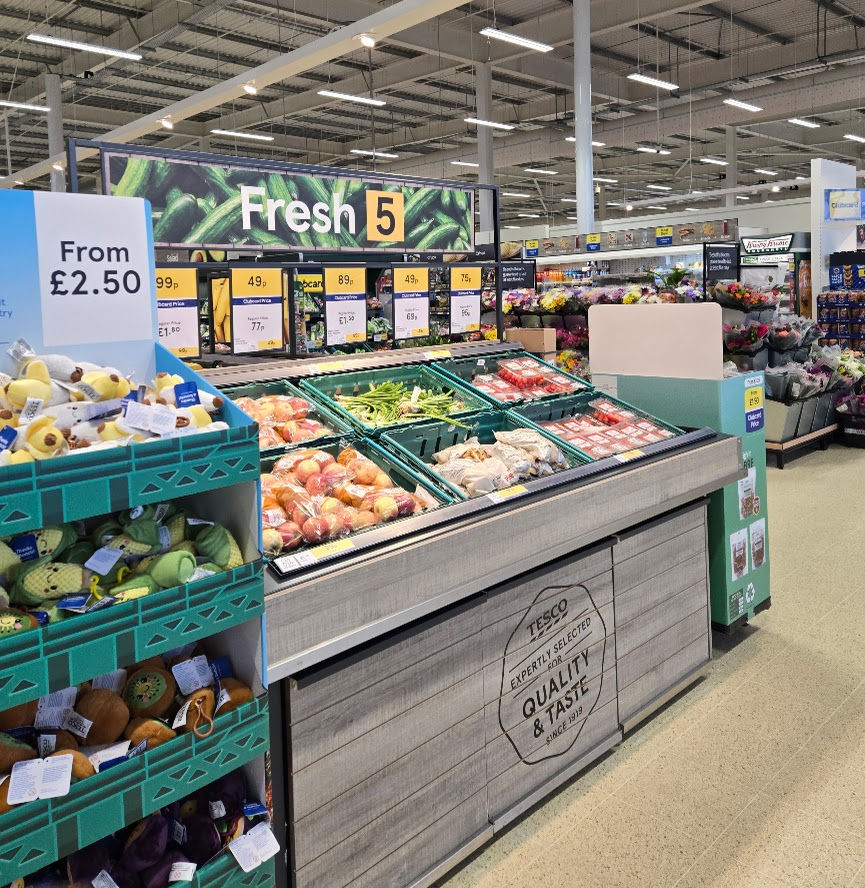
before taking the crates back with them. It’s a much greener system than what I’m used to in the US—though, to be fair, almost everything here seems to be done in a greener way.
Language
Most of the time, I have no trouble understanding the Scottish dialect in Aberdeen. Before I moved here, my son mentioned to his co‑workers that I was relocating to Aberdeen, and one of them replied, “The Scots can’t understand the people from Aberdeen.” That comment made me a bit nervous. I also knew that Gaelic—a Celtic language—is still spoken by some in Scotland. Much like in Ireland, Gaelic appears on government signs alongside English, part of an effort to keep these ancient languages alive.
Every once in a while, though, I’d be on the bus and suddenly realize people were speaking and I couldn’t understand a word. I’ve since learned there is a third language in northeastern Scotland called Doric. Doric is spoken regularly by about half the people in Aberdeenshire, especially in rural areas. I suspect that when I find myself completely lost in a conversation, it’s because I’m hearing Doric rather than English with an accent.
One lady at church even laughed and said, “I hope I don’t slip into Doric—you’ll never understand me.” And she was right. I wouldn’t.
Living here isn’t all that different from living in the USA, but the little differences keep things interesting. I think what I miss most is my car. I felt proud that I conquered riding the bus, even though people all over the world use public transport every day. Maybe, upon reflection, I felt good that I had joined them. But I’ll be back behind the wheel as soon as I return to the US.
Weather: Sunny
High: 62F (17 C) Low: 53F (12C)
Sunrise: 6:34 Sunset: 7:32 (19:32)
Hours of Daylight: 12 hours and 58 minutes
Comments